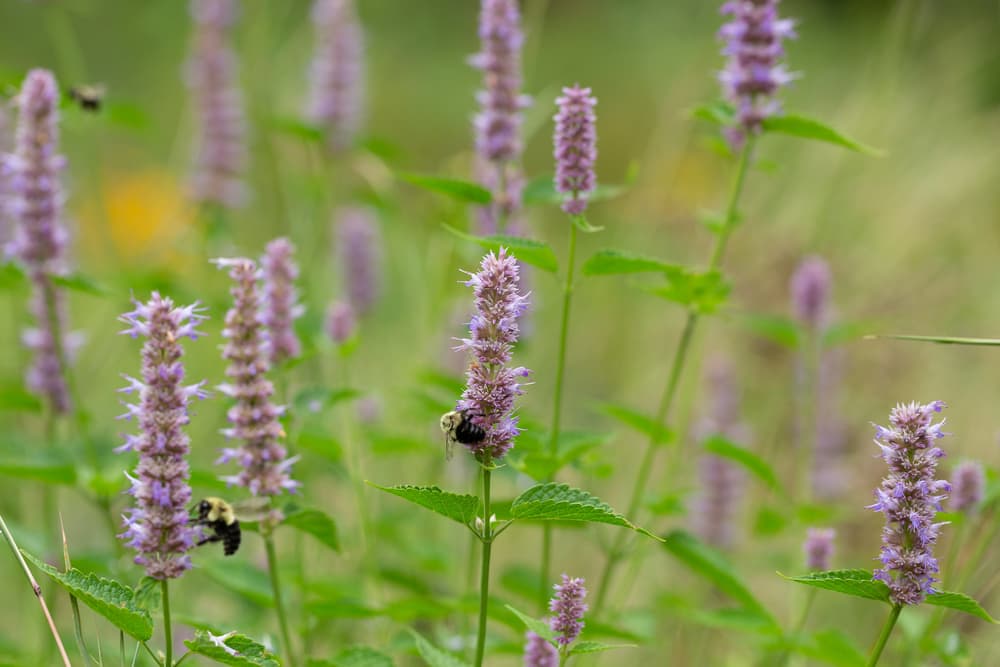
Let’s dig in to all the ways we can create habitat at home!
Regardless of the size and scope of your garden, making habitat for wildlife means making layers—layers composed of root-filled soil, insulating leaves, rotting logs, and native plants. From the living and dead tissue of plants springs diverse above- and belowground food webs of decomposers, herbivores, predators, and parasitoids. This web of interacting species is more fascinating to watch, more resilient to change, and less likely to experience pest outbreaks than spaces like lawns with their simplified food webs. This presentation describes the fundamentals of making habitat at home with native plants. As extreme weather becomes more common, our spaces can serve as a vital habitat and climate refuge for wildlife, providing much-needed relief from heat waves, desiccating winds, and heavy downpours.
Join Manager of Applied Ecology, Tyler Refsland, at First Congregational Church in South Portland for an engaging lecture exploring how you can bring these principles into your own growing spaces.
Suggested donation $5 - $10 at the door - please bring cash.
Success! A new password has been emailed to you.