Individuals living with disabilities regularly encounter physical barriers when trying to recreate outdoors. Out on trail, obstacles may include uneven terrain, narrow widths, gates, pathways without curb cuts, unreadable trail signs and markers, and noisy crowds.
Less widely appreciated, however, are the communication barriers that significantly limit people’s access to the outdoors.
The first step to every outdoor excursion is determining where to go and how to get there, and everyone benefits from easy access to detailed information about parks and trails in order to plan successful adventures. For many individuals living with disabilities, incomplete, sparse, judgmental, and dispersed information is the first hurdle that they face when trying to decide whether or not to venture outdoors.
The good news for trail managers who want to take steps to increase access to their trail systems is that there are immediately actionable next steps that can be undertaken straight away, at no cost, and to the full benefit of all trail users. You can make a difference today by developing skills with crafting more effective trail communications!
Providing detailed and objective information about trail conditions, parking access, on-trail infrastructure, potential obstacles and the local environment is the key to eliminating the informational barriers that prevent people from making their own determination about whether or not a specific trail is doable for them.
All efforts that aim to increase trail access and accessibility benefit from direct engagement with individuals and groups that know first hand what it’s like to be excluded from outdoor spaces. Seek opportunities to collaborate with individuals living with disabilities to help you better understand – and then write about – the physical barriers that impact the usability of your trails and communications materials. Invite fresh perspectives and feedback on your maps, kiosks, and online content.
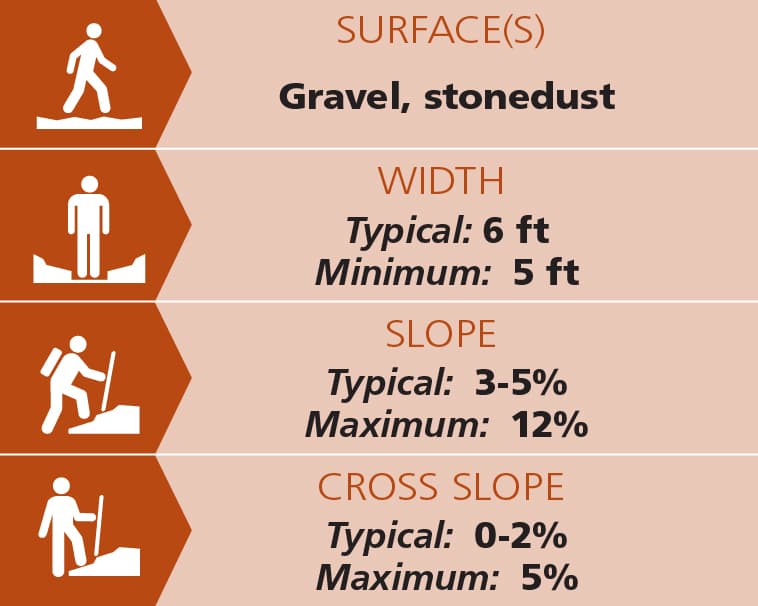
Your trail is not an “easy walk in the woods” for everyone. We exclude potential trail users from our trails when we fail to provide ample information for individuals to fully assess whether or not they can access these resources. Good descriptions focus on the characteristics of each trail, including: trail surface(s), firmness, width, length, and slope as well as any obstacles (rocks, roots, water bars, terrain dips, eroded areas) that impact the tread.
Note on-trail infrastructure such as bridges, boardwalks, or viewing platforms and whether the trail grades smoothly onto each. What is the actual size of any gaps or steps? Describe all amenities like restrooms, resting areas, or benches, how they are configured and how far apart they are from each other.
One of the best ways to objectively describe your trail is to measure it! Critical trail access information includes:
Any reported metrics should be accompanied by a note about when those measurements were gathered. There are low- and high-tech approaches for gathering this kind of information, and consider taking a training to learn what will work best for you.
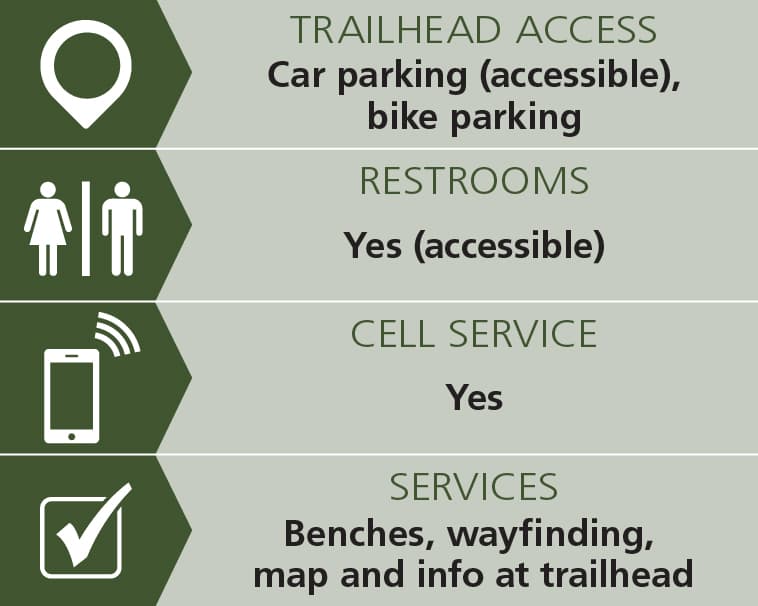
Deciding whether or not to visit a trail is influenced by the conditions at the trailhead. Be sure to describe the characteristics around the trailhead and parking area (number and types of spaces, parking lot surfaces, pathways, curbs, lighting, cell service, bike racks, etc.) with equal attention to detail as you do for the trail itself. Is there a trailhead kiosk with map and trail information close to the parking area that people can easily access? How much space is there to navigate around a gate or between bollards placed at the start of a trail?
All trails pass through unique, local environments that should be described. Trail descriptions should include details about the landcover, landforms, water features, cityscapes, and soundscapes through which they pass. Note sounds and smells – natural and man-made – as well as levels of use by other humans and their pets. Some trail users with invisible disabilities may not feel comfortable on your trail due to social or sensory sensitivities even though they are physically able to navigate your trail.
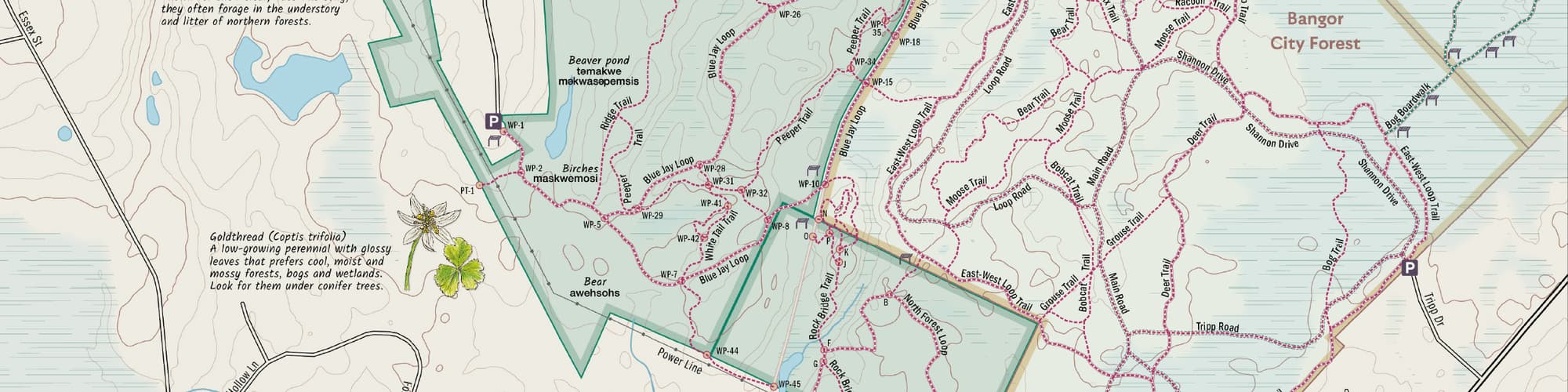
Communicating effectively is not only a matter of using more words. Yes, pictures are worth a thousand words, even mundane photos. Include images of parking areas, the trail tread, the available space to the side of a gate, not just panoramic views from the top of the hill or from scenic viewpoints. Create informative, legible, and easily readable maps. Use graphics and icons and vertical trail profiles to help trail users more fully envision and interpret the trail that they are wanting to explore.
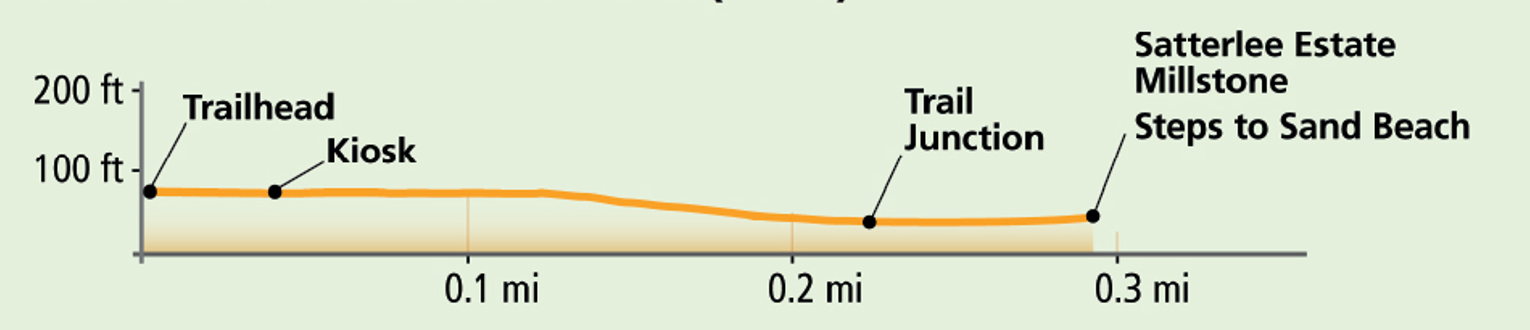
One thing that becomes clear right away when you start to rewrite and rework your trail descriptions is that there’s a lot to communicate! It is challenging to fit everything that you want to share on one trailhead kiosk or printed map. For this reason, it is important to strategize about ways to integrate your messaging between printed, online, and on-trail media.
Use QR codes on your kiosks and maps that direct users to your website where they can learn more about your trails, your conserved property, current conditions, and any special considerations. Online content is easy to edit, enhance, and expand. It can be translated by your web-based language translation and accessibility readers to reach even more viewers. Leverage other online resources like Maine Trail Finder that already weave together text, interactive maps, photos, user comments, and trail alerts.
Although trail ratings offer some general context, tags like “Easy,” “Moderate” and “Difficult” are not sufficient for anyone to determine whether or not certain experiences are appropriate and doable. General terms by themselves are not ample for orienting users to your trail. Relatedly, trails that are called “ADA Compliant” and “universally accessible,” even if built to federally-recognized standards, are not necessarily accessible to everyone. Define any terms that you may employ (see MTF Trail Ratings).
It is not uncommon for trail managers to exclude potential trail users because trail descriptions are written by individuals with ingrained assumptions about who uses their trails. As a dominantly able-bodied society, we regularly and unintentionally use terms that are hurtful and discriminatory when writing about the outdoors. Accessing the outdoors is a right for everyone, not a privilege. That accessible trail you just built benefits everyone, and the effort was not something you did to offer "special treatment" for individuals who are "sufering from" disabiilties or have "special needs." Inclusive trail descriptions work for everyone!
Trails require ongoing maintenance to remain top quality. The same is true for your trail communications. Revist, review, and revise your trail information to keep descriptions current and to communicate to up-to-date conditions to users about closures, maintenance issues, levels and patterns of public usage, and any exciting new improvements.
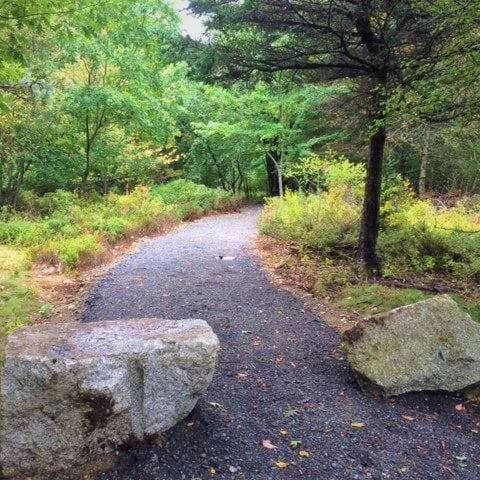
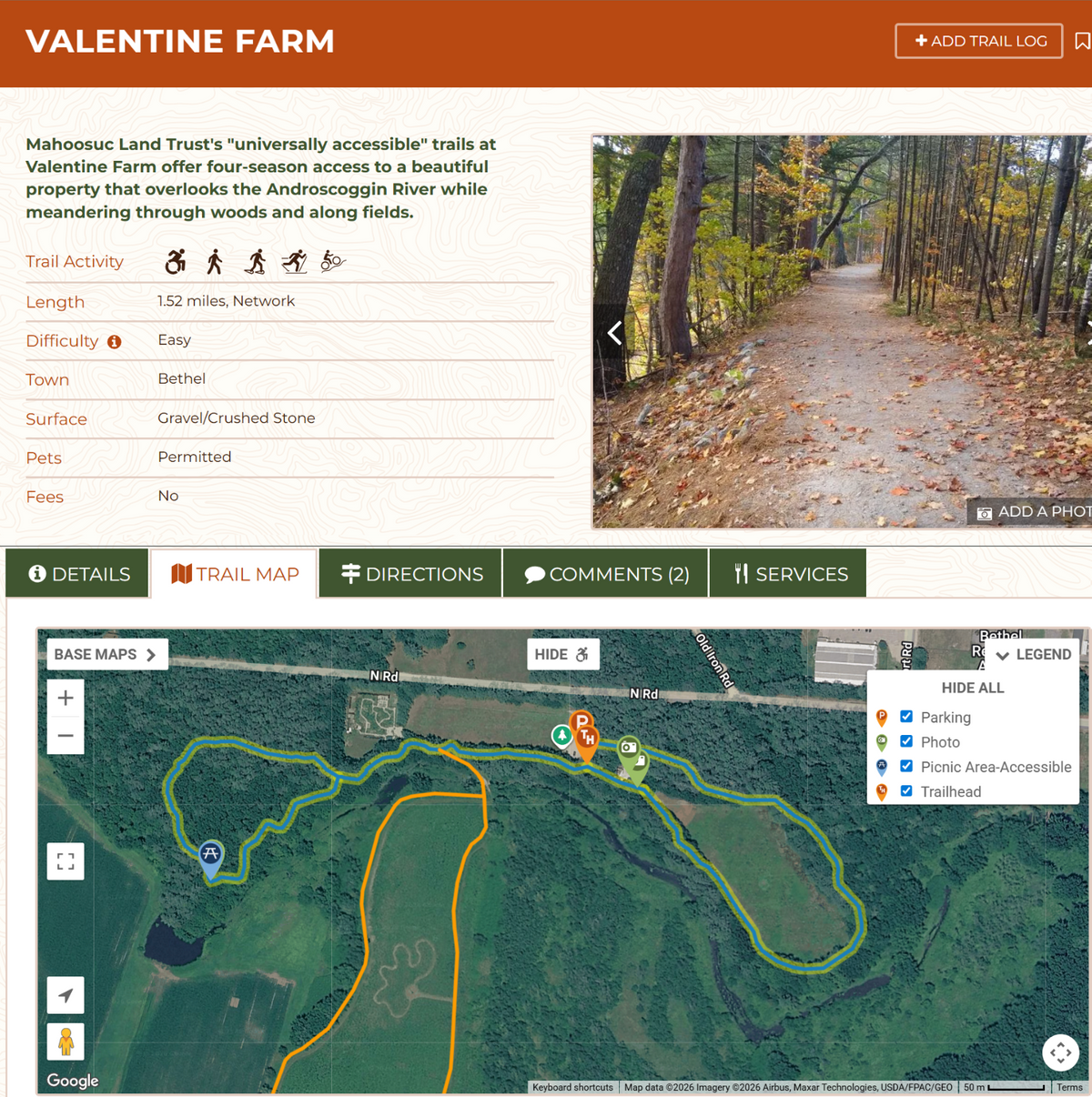
Crafting effective trail communications is a skill that takes practice and benefits from ongoing review and revision. Your results will get better with time! The following trail postings in Maine Trail Finder – tagged as Access(ible) Adventrues – are good examples that put into practive many of the principles noted above.
If you found this information useful and/or have suggestions for how we can make it better, please:
We wish to thank the Onion Foundation for supporting this facet of our work.
Success! A new password has been emailed to you.